
Missed calls are never recovered
STAGE 05 OF 06 — RETAIN & GROW
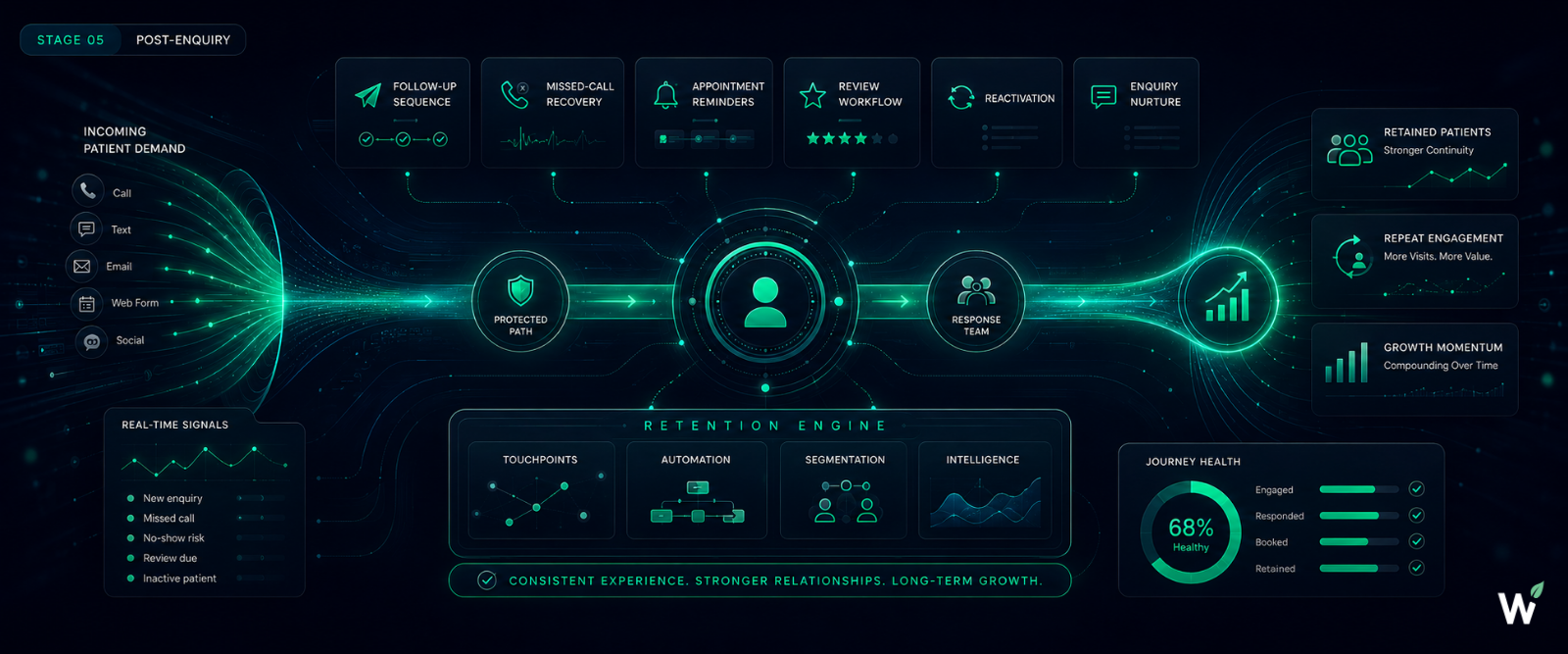
Stop patient demand from leaking after first contact.
Growth does not end when a patient calls, books, submits a consultation request, or asks a question. Retain & Grow protects the opportunities that happen after the first enquiry — before they quietly disappear.
WHY IT COMES FIFTH
First contact still needs protection.
Conversion captures the enquiry. Retain & Grow protects what happens next.
A dental practice can improve visibility, build trust, and make the booking path easier — then still lose opportunities because follow-up is slow, appointment reminders are inconsistent, missed calls are not recovered, review requests happen infrequently, or past patients and lapsed enquiries are never reactivated.
That is why Retain & Grow comes after Conversion. It strengthens the post-enquiry path so patient demand does not disappear after the first signal of interest.
05
Retain & Grow is the fifth Growth System stage
1
post-enquiry path to protect for every dental patient
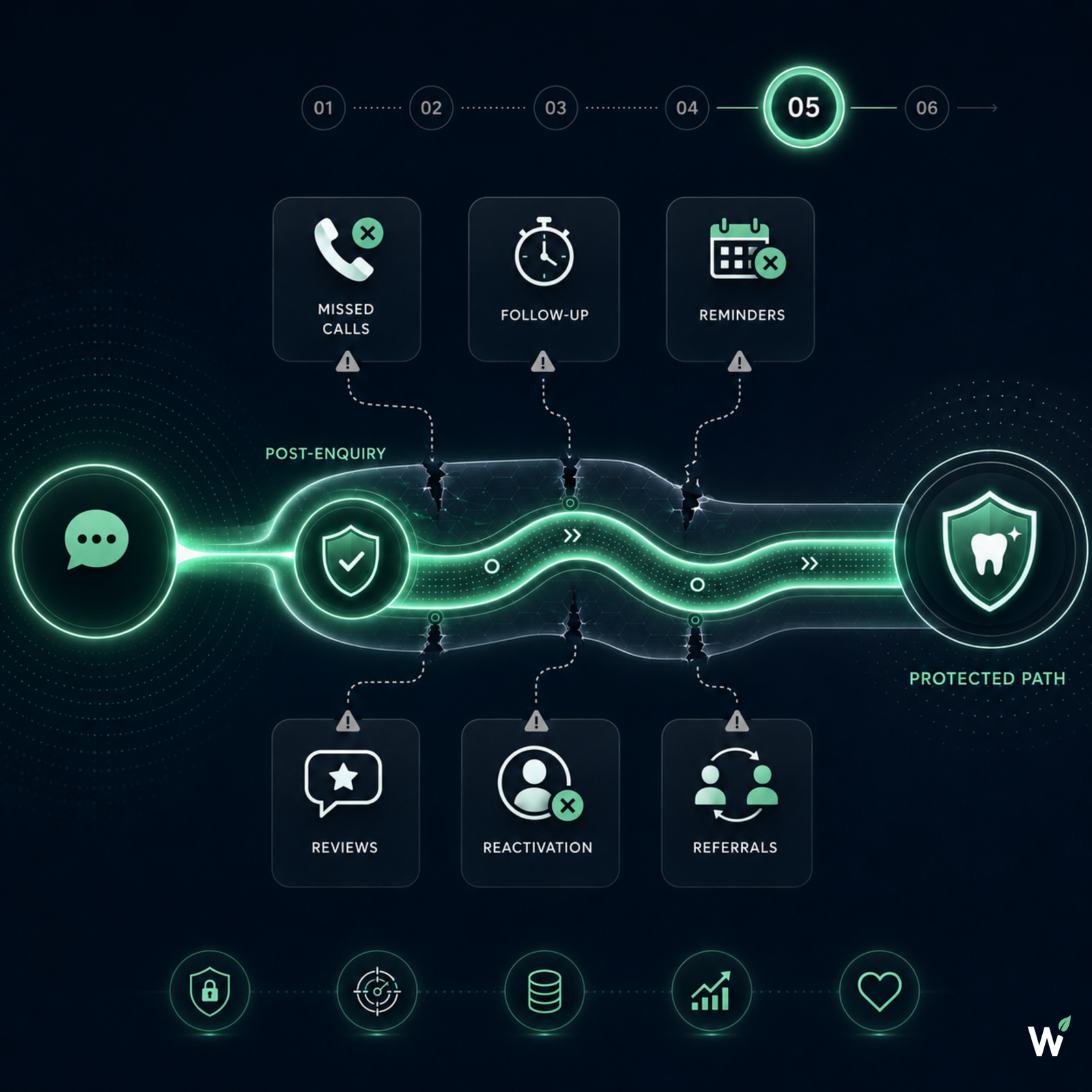
What breaks without this stage
Consultation request forms receive slow follow-up
Appointment reminders are inconsistent and no-shows happen
Review requests happen only occasionally
Past patients and lapsed treatment plan enquiries are not reactivated
Referrals are left entirely to chance
THE AFTER-CONTACT LEAK
More visibility cannot fix forgotten follow-up.
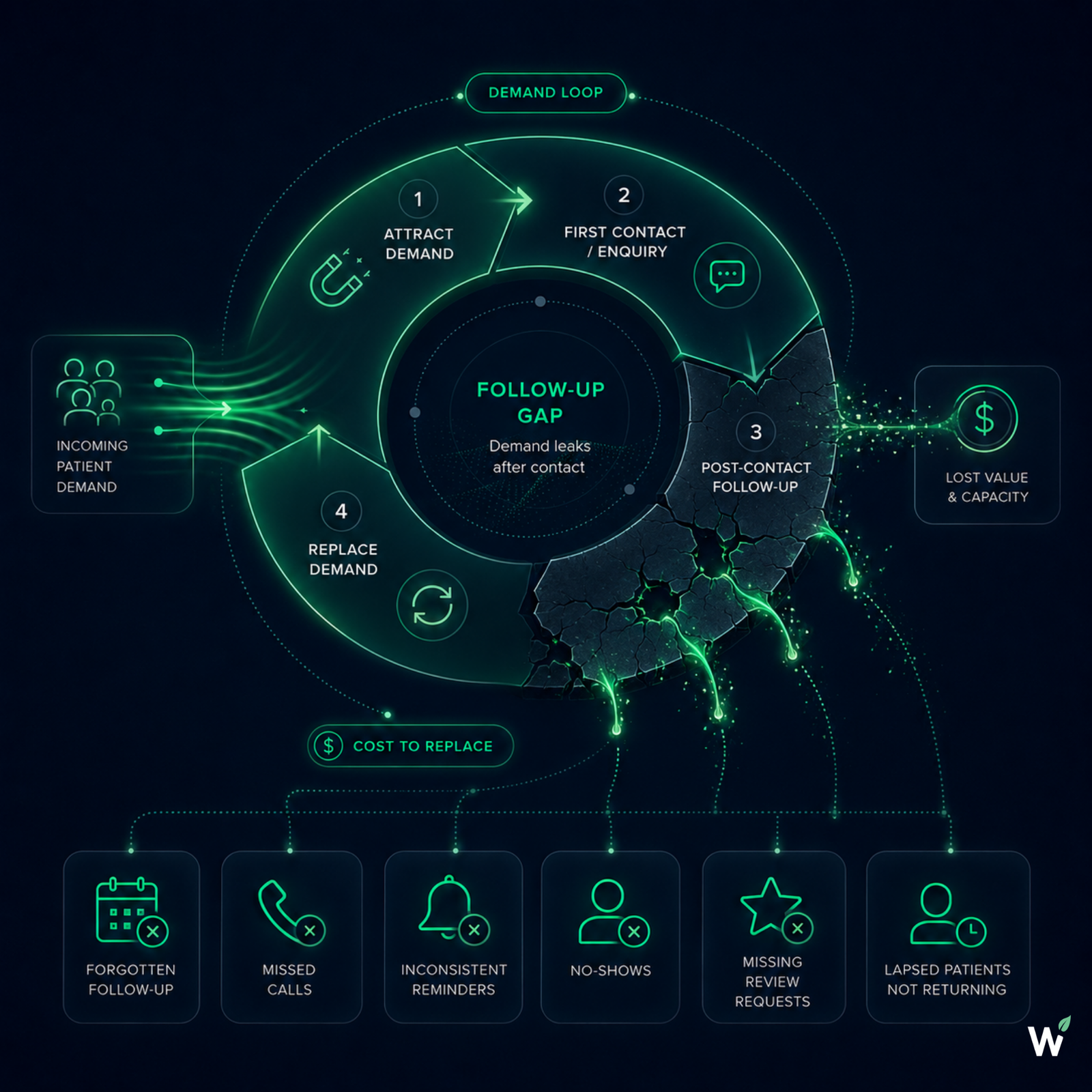
Without a follow-up system, a dental practice keeps needing more new patient demand to replace enquiries that already showed interest. That creates a cycle: spend more to attract patients, lose some through weak post-enquiry processes, then spend again to replace them.
The loss is often invisible because it happens after the patient has already been in contact. A missed call, delayed response, unanswered consultation request, no-show with no recovery, an unasked review, or a forgotten treatment plan patient may never appear in a marketing report.
But each one weakens growth.
Practice owner language this stage resolves
We meant to follow up with that patient but the week got away from us.
Missed calls during surgery hours do not always get called back.
Appointment reminders are inconsistent — we get no-shows.
We do not ask for reviews in a reliable way.
We have patients who started a treatment plan and went quiet.
Past patients are not hearing from us and we are not sure why they have not returned.
WHAT WE REVIEW
We strengthen the after-enquiry path for dental practices.
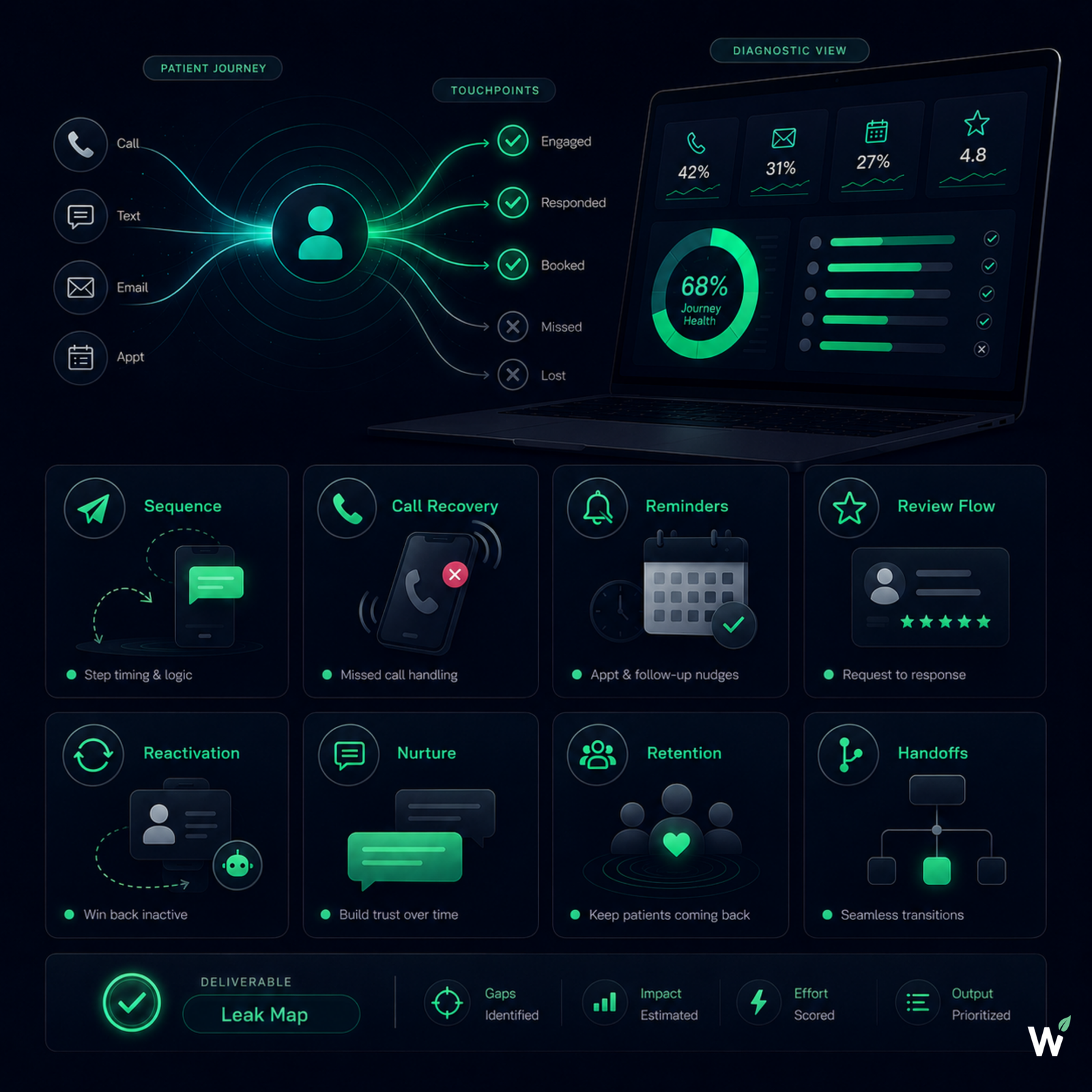
GROWSILK reviews what happens after a prospective or existing patient takes the first step. The goal is to keep interested patients moving forward, recover missed opportunities, and create repeatable touchpoints that support retention, reviews, and growth.
What GROWSILK reviews and builds
Follow-up sequence structure
GROWSILK reviews how and when enquiries are followed up after a form submission, call, consultation request, or unanswered message. The goal is a clear, repeatable sequence instead of follow-up that relies on memory.
Missed-call recovery
Missed calls are often high-intent moments for dental practices — especially implant, cosmetic, and aligner enquiries. GROWSILK reviews what happens after a missed call and how recovery should be structured.
Appointment reminders
Reminders reduce no-shows and patient confusion. GROWSILK reviews reminder timing, message clarity, confirmation steps, and missed-appointment recovery.
Review request workflow
Reviews feed the Trust stage. GROWSILK reviews when review requests should happen, which patients receive them, what message is sent, and how responses are monitored.
Reactivation prompts
Past patients and lapsed treatment plan enquiries can become future appointments. GROWSILK reviews how reactivation prompts can bring the right patients back without sounding impersonal or pushy.
Enquiry nurture
Some prospective patients need more time to decide. GROWSILK reviews short nurture paths that answer treatment questions, reduce hesitation, and keep the practice present while the patient is still deciding.
Patient retention touchpoints
Growth can come from existing relationships. GROWSILK reviews practical touchpoints that encourage treatment plan follow-through, hygiene recall, and patient referrals.
Internal response process
A system only works if the clinical and admin team can follow it. GROWSILK reviews handoff points, response ownership, expectations, and where the process needs to be simpler.
Deliverable framing
- The result is a clearer view of where patient opportunities leak after first contact and what follow-up infrastructure should be built first.
NEXT STAGE
Amplify only after the path can hold more demand.
Once a dental practice can be found, trusted, chosen, and followed up with consistently, the growth path becomes strong enough to handle more demand. That is when amplification starts to make sense.
The next stage is SURGE — paid demand amplification layered on top of a working organic foundation. SURGE should not be used to cover leaks in earlier stages. It should be used to send more patient demand into a path that is already ready to capture, convert, and retain it.
START WITH DIAGNOSIS
Find out where your patient demand keeps leaking.
The Dental Growth Score helps identify whether your biggest bottleneck is Visibility, Trust, Conversion, or multiple leaks across your practice’s growth path.
Retain & Grow Stage
SURGE
Find out where your dental practice’s growth path is leaking.